A Question of Philosophy
The Artist's Intention
The grandeur of the illusionistic Baroque ceiling calls into question the position of the viewer in relation to the space and characters of the depicted scene. In attempting to clarify the intentions of the artists behind these overhead spectacles, two primary factors arise. First, is the viewer meant to be incorporated or subordinated in terms of the painting? Elements of each image’s construction point to either a connection with or a separation from the viewer; given the image’s distance from the spectator’s eye, each painter appears to choose different techniques to unify the upper “space” with the room or to create a separation of those two spaces. Second, as an extension, how is the spectator intended to perceive their own physical and existential position in relation to the figures depicted? Communion with the painted figures could imply a similarity in essence, while separation could suggest otherness.
The Means to the End
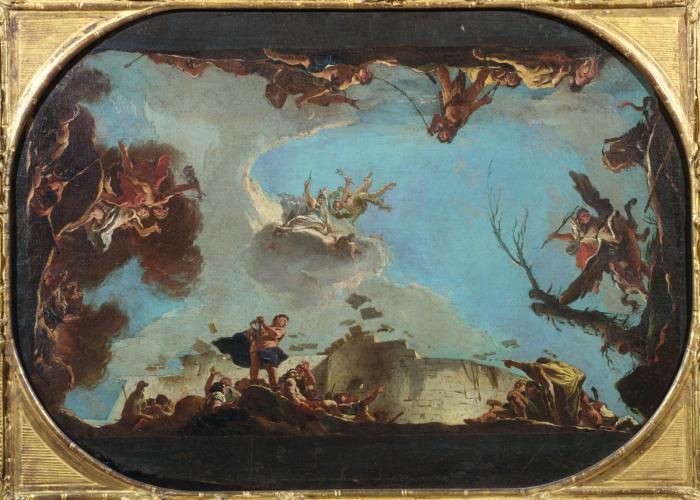
The methods of achieving these desired effects pertain mostly to the vertical manipulation of space. The most well-executed illusionistic ceilings created a sense of continuous upward or downward movement, or sometimes both. The comparison between the frescoes of Gaulli and Pozzo are the most striking example of this divergence in direction; as mentioned, Pozzo’s dramatic quadratura project the space of the ceiling infinitely upward, while Gaulli’s figures overlap their framed enclosures and look as though they are bringing their part of the image down into the room. Gaulli also incorporates the customary upward motion with a high central vanishing point, but the figures “bridging” the peripherals of the fresco are the strongest differentiating factor, since Pozzo’s movement is all upward and very little downward. Other representative examples include Canuti’s Apotheosis of St. Dominic, in which the figures predominantly bring the eye upwards in their ascension towards the light of heaven, and Tiepolo’s Translation of the Holy House, in which angels and sinners appear to travel underneath the painting’s frame towards the spectator.
Another factor involves the placement and relationship of figures, both to each other and their surroundings. The artist can communicate a greater sense of depth by the relative sizes of figures, such as the layer of tiny angels in Cortona’s Trinity in Glory or Pozzo’s diminutive St. Ignatius. In terms of surroundings, figures can be analyzed by their con termine or senza termine positioning exemplified in Veronese’s work. Interestingly, senza termine figures are the more important of the two styles for use in both upward and downward movement of the image. They have the unrestrained ability to rise into the fictive sky, since they are not actively grounded to land or frame, but they also have a greater freedom to descend for the same reason: there is no obstacle preventing them from doing so. Given the growth in usage of senza termine as the Baroque progressed, the painters may well have been aware of the increased flexibility of the method.
These techniques serve the main purpose of distancing or connecting the spectator’s space and the painting with its associated figures. The relatability of the image, such as that derived from the overlapping bodies of Gaulli or the falling figures of Veronese, depends on downward movement. The illusion of grandeur and divine unattainability, as seen in Pozzo and Canuti, rests on movement upward.
The Spectator's Place
The analysis of this chronology of ceiling paintings leads to an understandably split conclusion: depending on the artist, the purpose of the illusion is either to extend the painting into the room and assimilate the spectator into its space or to showcase the spatial separation of the aerial scene from the viewer’s position. However, one unifying theme exists. Regardless of techniques of overlap or distance, the illusion of the Baroque ceiling is meant to subordinate in the very basic terms of making the spectator feel small in a fictively expanded space. The goal of the presented paintings is generally to open up the ceiling and give the impression of a bigger, or even limitless, space, bound only by the four vertical walls of the room itself. The space occupied by the viewer themself is more consistent than the ability of the viewer to “be part of” the scene, since that aspect changes between artists.
As for motivation, grandeur is a selling point for an ambitious patron; the spectacle and storytelling potential of the illusionistic ceiling make both conscious and subconscious impressions of power. On the physical side, the sheer scale of the paintings and their intricate compositions are impactful at face value. Allegories of virtues and scenes of gods and saints that cover an entire vault overwhelm the senses for such a small spectator, as previously mentioned. In a more psychological vein, these paintings of the fantastic “made real” in visual terms that the eye can comprehend represents a conundrum for the mind that can result in the desired sense of awe. Logically, the brain knows that the figures and fictive architecture don’t exist in the same three-dimensional plane, but the visual cues telling it that they do can provoke questioning or wonder at the image’s mere existence. The attempt to rationalize how the fantasy exists could promote a subconscious level of respect for the patron, whose resources and power caused the image’s existence, given adequate talent on the artist’s part. For an influential family like the Barberini or an emerging religious order like the Jesuits, inspiring respect and awe was extremely desirable if not absolutely essential. A great work of illusion spread across the vault of a nave or the ceiling of a salone was no small matter, since it could subject visitors to the glory of God or the glory of the family’s power, whichever was in the patron’s best interest.