Ascension: Illusion and the Baroque Ceiling
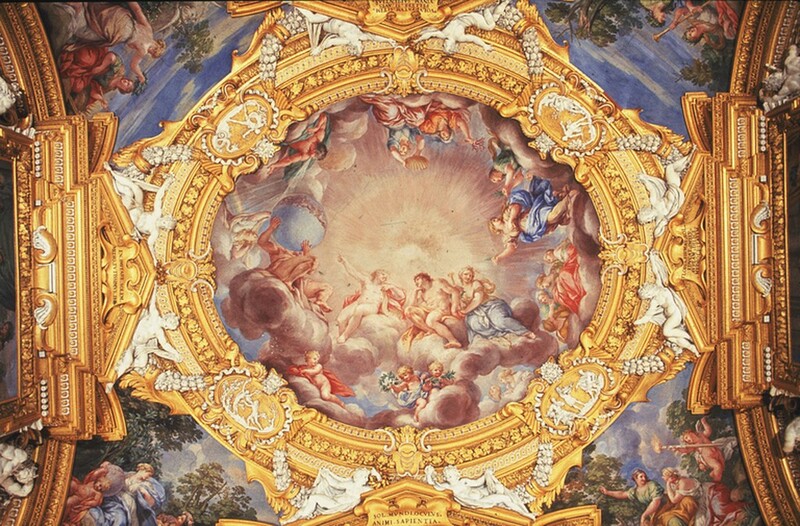
Illusions, as defined by Britannica, are “special perceptual experiences in which information arising from ‘real’ external stimuli leads to an incorrect perception, or false impression, of the object or event from which the stimulation comes” [1]. They are meant to shift the fabric of reality by taking advantage of the human senses, allowing elements of the surreal and the fantastic to assume a reality of their own. But perception requires a perceiver: the human whose simple senses can be duped by the right visual stimuli. The viewer “participates” in the illusion in the sense that their visual experience dictates the extension of reality to include the illusory image; this unity of fictive and real places the viewer in the same physical space as the figures and scenery of a painted image, for example.
For narrative purposes, the techniques of illusionistic painting are effective because they imply the aforementioned participation of the viewer in the unfolding of the depicted events. However, one must question the true participatory power of the human viewer in scenes of divine or mythological phenomena; the divide between gods and men becomes more indistinct when the two are made to exist in the same space and in similar human forms.
This examination of the illusionistic techniques used in Italian Baroque ceiling paintings and frescoes explores the question of the boundaries of reality according to the artist’s intention. Tracing the history of the illusionistic ceiling chronologically, each piece demonstrates techniques used to further the illusory experience and convey the artist’s individual motives. In these endeavors of illusion, what is the proper place of the spectator in the experience of the mythological and the divine, and how is that position communicated?
A Note on Techniques
A couple different terms related to illusionism are used repeatedly in this exhibit. Quadratura refers to the use of painted (fictive) architectural features, such as columns or arches, within a wall or ceiling painting, usually as a way of extending the height of a ceiling. Di sotto in su translates to “from below to above” and refers to images meant to be seen from below; the point of view is under the depicted figures, so that the figures look suspended on a higher plane [2].
References
1. L. Jolyon West. "illusion." Encyclopedia Britannica, June 19, 2017. https://www.britannica.com/topic/illusion.
2. Britannica. Editors of Encyclopaedia. "sotto in su." Encyclopedia Britannica, October 27, 2008. https://www.britannica.com/art/sotto-in-su.