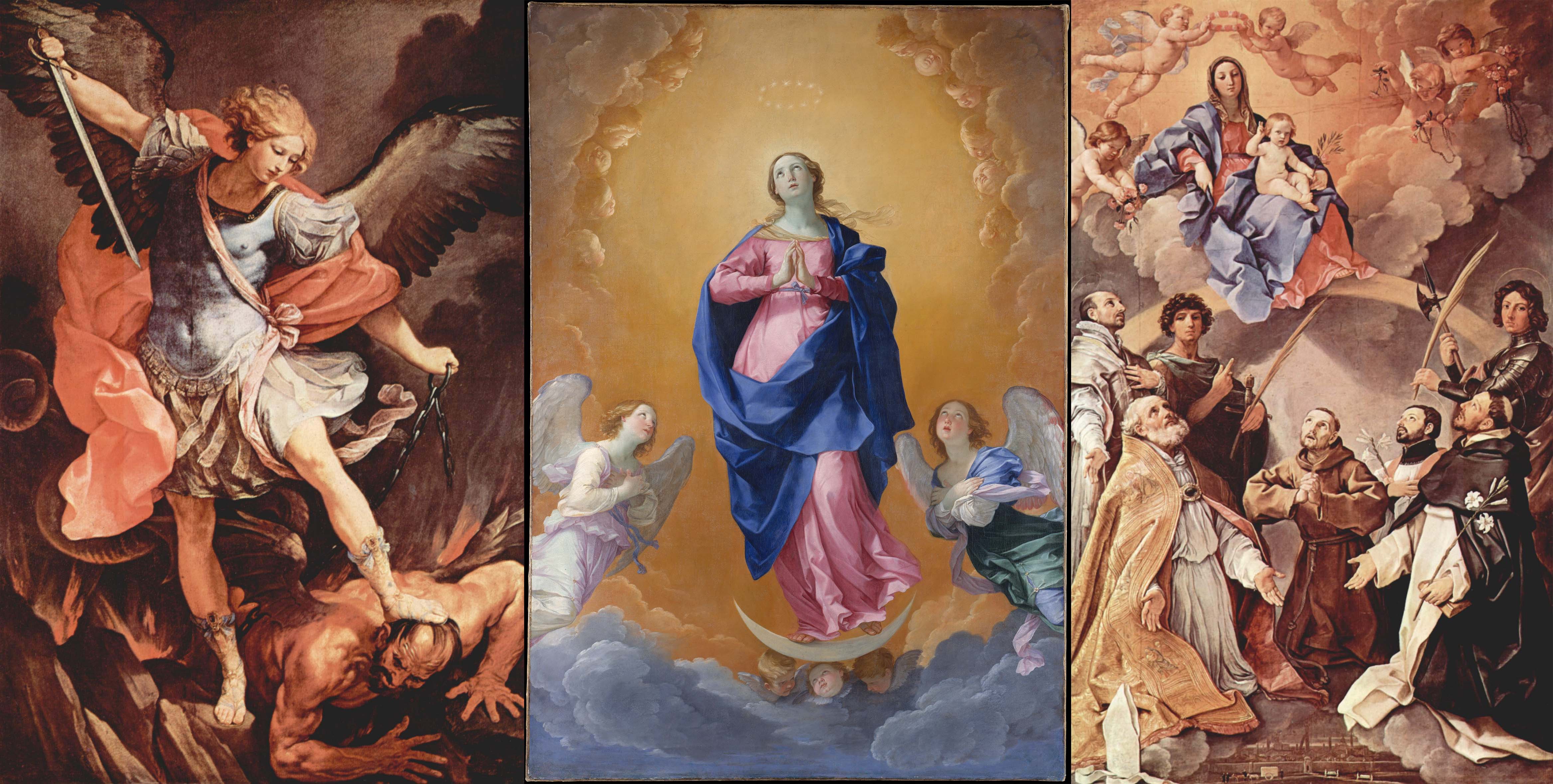
Introduction
Guido Reni (1575-1642) was an Italian painter of the Baroque period and a dominant figure in the Bolognese School. In 1584, Reni entered the workshop in Bologna of the Flemish painter Denys Calvaert, where he studied anatomy, perspective, low reliefs, and Old Master painters. Reni left Calvaert and transferred to the more humanistic Carracci academy in 1594. His principal teachers at the academy were Ludovico and Agostino Carracci. By 1598, Reni had apparently left the Carracci academy, after having quarreled with Ludovico, as he had done earlier with Calvaert.
In his early career, Reni executed important commissions for Pope Paul V and Scipione Cardinal Borghese, painting numerous frescoes in chapels. In his religious paintings, Reni evolved a style that tempered Baroque exuberance and complexity with classical restraint. His iconic compositions show his preference for gracefully posed figures that mirror antique ideals. In the later part of his career, Reni employed lighter tones, softer colors, and extremely free brushwork.
The main inspirations for Reni’s art include the work of the Carracci family and the frescoes of Raphael. Reni strove toward a classical harmony in which reality is presented in idealized proportions. The mood of his paintings is calm and serene, as are the studied softness of color and form. His religious compositions made him one of the most famous painters of his day in Europe, and a model for other Italian Baroque artists.
The Exhibition
This exhibition is structured to answer this question: to what extent and by what means are Guido Reni's religious art pieces innovative?
Although Reni has been questioned for being repetitive and limited in his compositions, he did have innovative accomplishments in terms of his unique iconography of the mythological figures and his critical inheritance of Raphael and the Carracci's.
The first part of the exhibition reflects Reni's repeating compositions.
- Saint Sebastian
- The Immaculate Conception
- Allegorical Comparison: Fortuna with a Purse
The second part of the exhibition shows Reni's innovations in iconographical representations.
- The Angel Appearing to Saint Jerome
- Hippomenes and Atalanta
The third part of the exhibition examines Reni's works that have critically absorbed the influence from Raphael and the Carracci's.
- The Archangel Michael Defeating Satan
- Penitent Magdalene
- The Separation of Night from Day
- Palla della Peste
- Mythological Comparison: The Aurora
Credits
Jenny Chen