Background
Gian Lorenzo Bernini is considered to be one of the important artists from the Baroque period and is considered to be one of the most influential artists of all time. He was born in Naples in 1598 and from a young age was considered gifted in the arts.
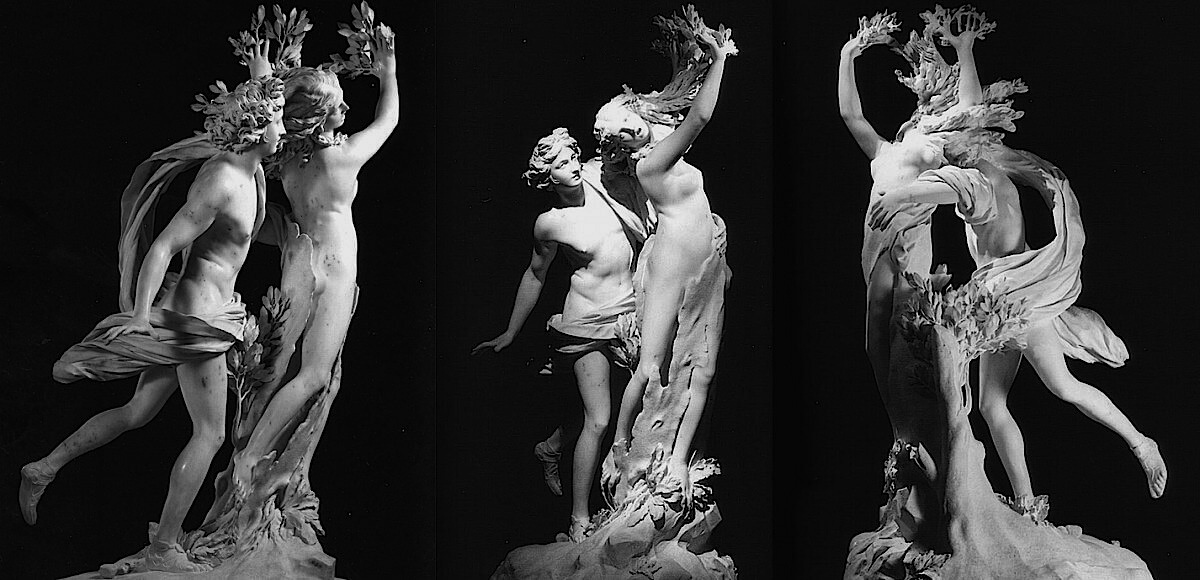
His marble sculptures are his most celebrated works with groundbreaking biblical works like the David and The Ecstacy of St. Theresa. However, many of his most renowned sculptures, which encompass an earlier point in his career, include his mythological sculptures. Many of these sculptures depicted Greek and Roman myths.
During the Baroque period, alongside several biblical works, we see a large number of mythological artworks– a continuity from the Renaissance period. Bernini’s works are no exception. His mythological sculptures are famous for their dynamic composition and emotional storytelling.
Significances and Influences
This collection explores some of Bernini's most notable mythological sculptures and tackles to understand why Bernini was so intrigued by these myths and how he was able to communicate these myths through sculpture. The exhibition will examine the many factors that directly influenced Bernini's creation of these mythological works including the artistic training Bernini received from his father and his patronage to Cardinal Borghese. Moreover, this exhibition will also examine the influence of Ovid's The Metamorphoses and how it was used as Bernini's main source of inspiration for these mythological works.
Finally, on a broader scale, this exhibition will also explore the use of mythology in the Counter-Reformation period and its place in Baroque art.