Browse Items (8 total)
- Collection: Lavinia Fontana's Work and Comparison Pieces
Sort by:
Self-portrait
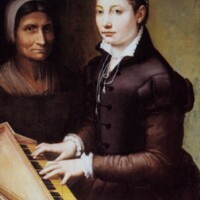
This self-portrait of Sofonisba Anguissola depicts the artist seated at a keyboard and accompanied by an older maidservant. Anguissola wears a dark brown, somewhat unembellished gown with a small frilled collar and cuffs. She sits very tall and…
Portrait of a Nun
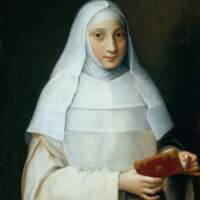
Sofonisba Anguissola, the artist of the portrait, was born into a financially struggling noble family with six siblings. She was known to utilize her family members as subjects of her early paintings (Murphy 2007). Indeed, the pictured individual is…
Self-portrait at the Clavichord
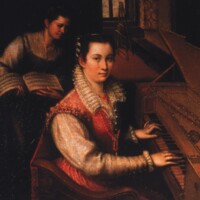
This self-portrait of Lavinia Fontana depicts the artist playing the clavichord, an appropriately cultured activity for a rising noblewoman. The seated Fontana is resplendent in an intricate red gown decorated with jewels and a lace collar. Brightly…
Portrait of a Noblewoman
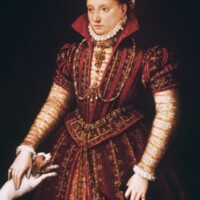
Lavinia Fontana was born and educated in Bologna towards the end of the 16th century. During this time, Bologna was remarkably progressive, compared to other Italian cities, regarding its opportunities for women – both educationally and economically.…
Holy Family with Saints Margaret and Francis
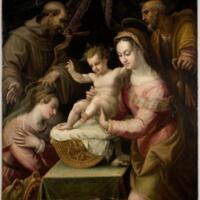
This 1578 oil painting depicting the Holy Family is one of multiple works Fontana created of the Holy Family. Her talent for capturing the female form is prominently on display in this work, as she represents Mary from the knees up. Fontana captures…
Venus and Cupid
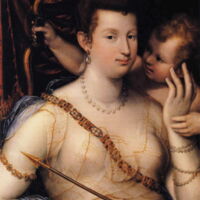
This is a portrait of Isabella Ruini as Venus. A transparent veil stitched with gold thread of extraordinary delicacy reveals the marmoreal body of this Venus with a slender throat and delicate features, brought out to their best advantage by jewelry…
Venus and Cupid
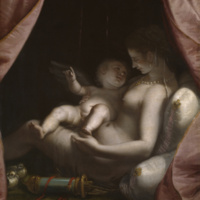
This painting was completed by the Italian Mannerist artist Luca Cambiaso (1527-1585), a leading artist in Genoa in the 16th century. The painting was done in his middle period, which was his best period when his style was more subdued and more…
Nativity
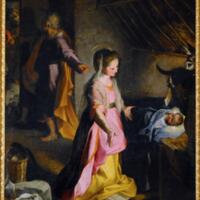
About two decades after Fontana’s “Holy Family with Saints Margaret and Francis”, Federico Barocci produced a “Nativity”. Both works dealt with the Holy Family as subjects which is the primary impetus for their comparison. On a deeper level, both…