
Dublin Core
Title
Re-claiming the Pontine Marshes
Description
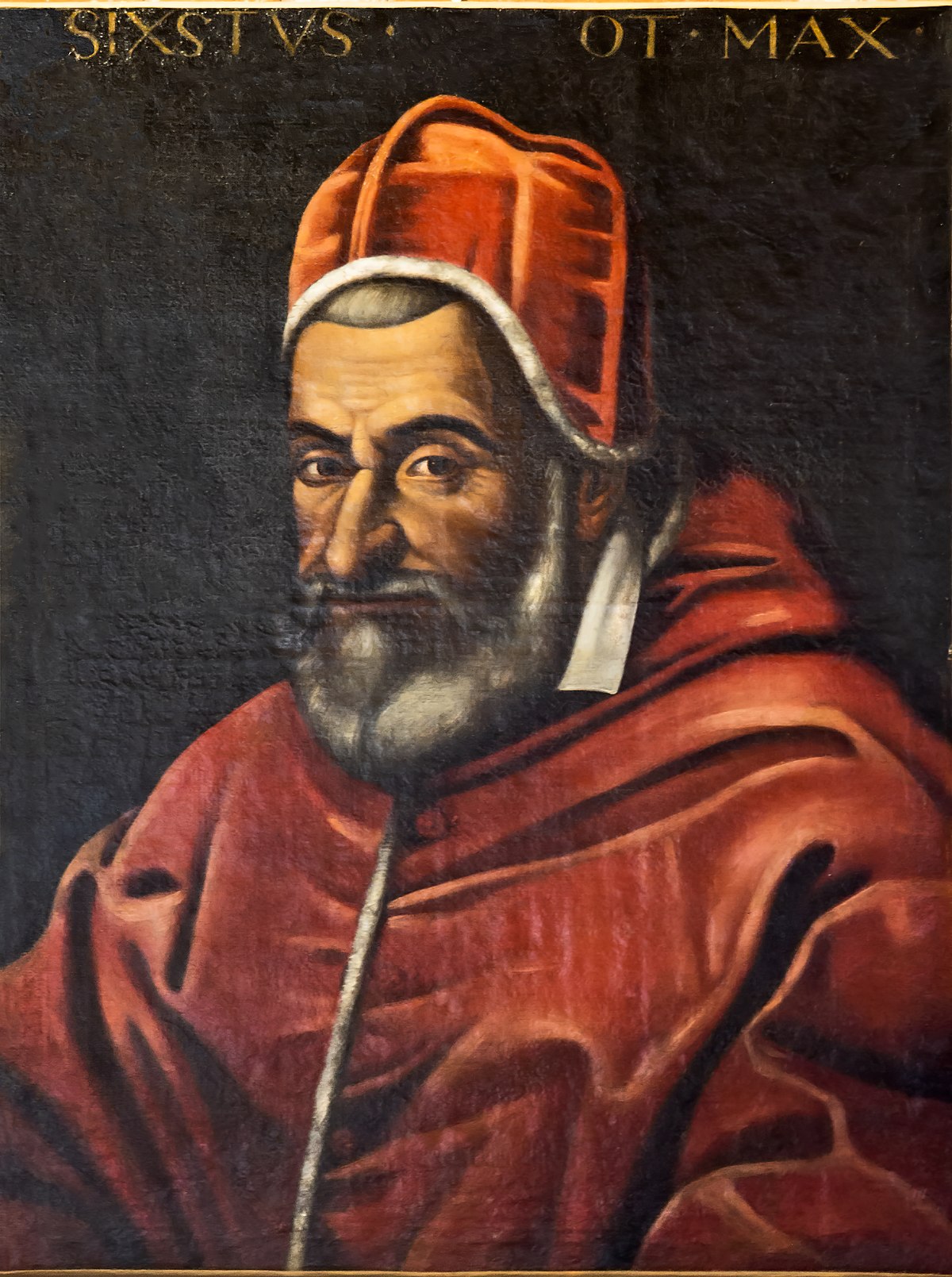
Pope Sixtus V’s work on reshaping Rome extended beyond its city walls. Sixtus V drained the Pontine Marshes, malarial wetlands, located south of Rome along the Appian way and connecting to the Terracina [1]. The Pontine Marshes are low-lying plains with intersecting canals surrounded by mountains, and after winter floods, the land is very fertile and brings the potential for incredible production as Rome's granary [2]. The Roman emperors continuously tried to claim this land for themselves, but failed due to harsh weather conditions such as flooding.
After centuries of failed attempts to reclaim the land, Pope Sixtus came onto the scene in 1585 with the beginning of his papacy and he hired his own engineer, Ascanio Fenizzi, to reclaim this land [2]. They plotted and constructed a subsidiary canal, the Sisto canal, to collect runoff from the mountains and carry it to sea. This was a very innovative design and was impressively executed considering this was a world without automatic pumps [2].Without electricity, moving masses of water was very difficult and costly to maintain [2].
This reclamation is particularly significant because the Pontine Marshes were very fertile and could be very advantageous for grain crops, something that Rome’s growing population desperately needed [1]. This reflects Sixtus V's care and commitment towards helping the poor Romans, and not just the elite. The Pontine marshes provided agriculture and productivity for commoners. In fact, Sixtus V led a victory procession to Terracina after its reclamation [1]. Unfortunately, the Tiber River flood of 1589 undid much of Sixtus V’s work in the Pontine Marshes, and he passed away in 1590 before he could work towards a resolution.
Attached is a stamp that reproduces the image on a medal created during Pope Sixtus V’s papacy after his successful reclamation of the Pontine Marshes [3].
Pope Sixtus V’s impact on the city of Rome and its citizens is particularly impressive because he took action outside the city walls as well, a mission that leaders before and after him rarely attempted.
Creator
Pope Sixtus V and Ascanio Fenizzi
Source
[1] Long, Pamela O. Engineering the Eternal City: Infrastructure, Topography, and the Culture of Knowledge in Late Sixteenth-Century Rome. Chicago: University of Chicago Press, 2018.
[2] Frost, Ruth Sterling. “The Reclamation of the Pontine Marshes.” Geographical Review 24, no. 4 (1934): 584–95. https://doi.org/10.2307/208848.
[3] “15 Lire Draining of Pontine Marshes by Pope Sixtus V Single.” 15 lire Draining of Pontine Marshes by Pope Sixtus V single | National Postal Museum. Accessed December 9, 2021. https://postalmuseum.si.edu/object/npm_2008.2009.328.
[4] Kallis, Aristotle. “The ‘Third Rome’ of Fascism: Demolitions and the Search for a New Urban Syntax.” The Journal of Modern History 84, no. 1 (2012): 40–79. https://doi.org/10.1086/663287.
Publisher
Pope Sixtus V
Date
1585
Contributor
Cameron DeChurch
Rights
This is land that anyone can see.
Format
310 square miles
Type
Marsh land
Coverage
Pontine Marshes, Lazio, Italy