Fontana del Nettuno
Dublin Core
Title
Fontana del Nettuno
Description
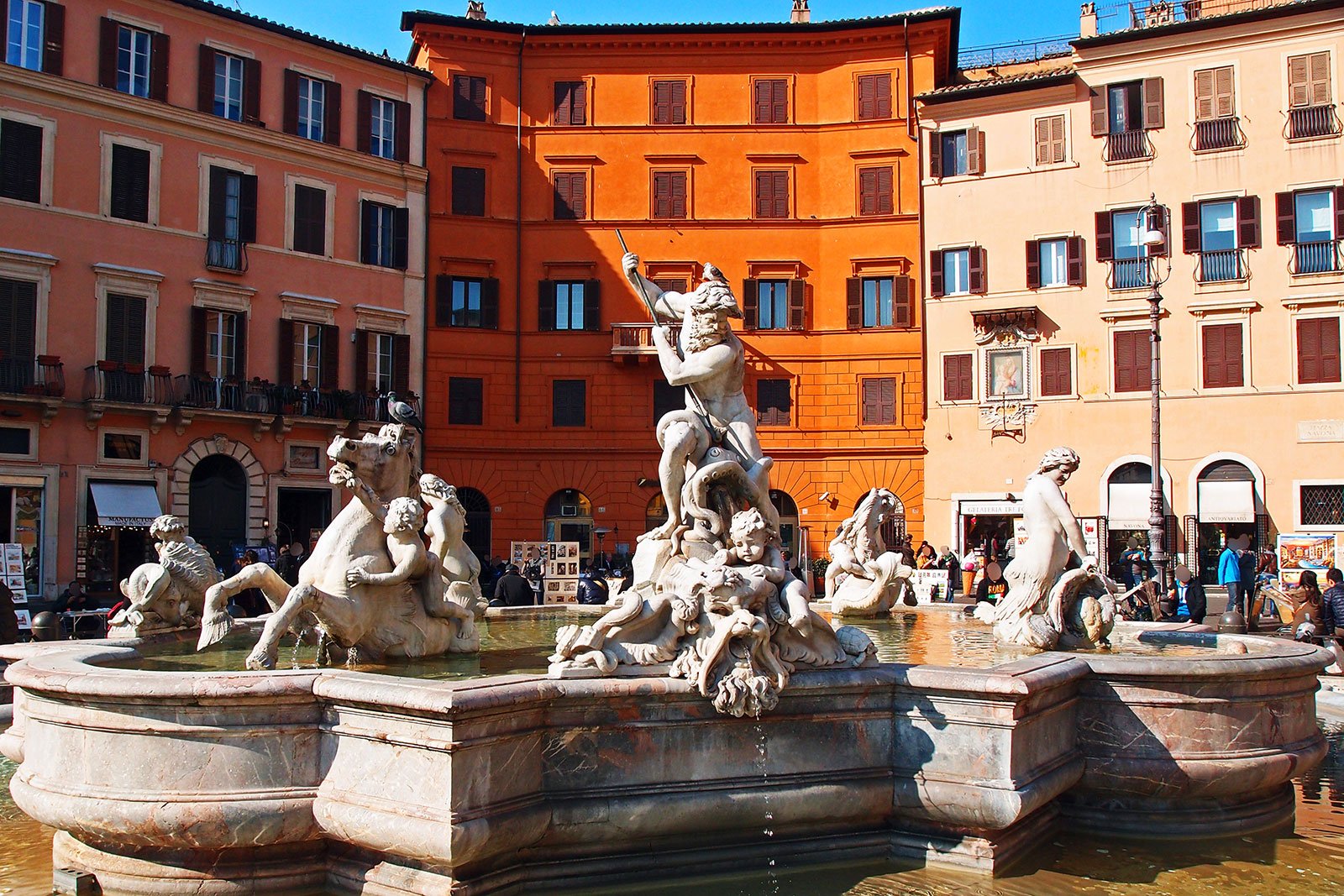
The Fontana del Nettuno is one of many fountains that adorn Piazza Navona. Located on one side of the central Fontana dei Quattro Fiumi, the Fontana del Nettuno has a quiet presence to it. The fountain was built in 1574 by Giacomo della Porta, commissioned by Pope Gregory XIII. This was the first fountain in the Piazza Navona, followed a year later by the Fontana del Moro on the opposite side of the piazza. The two fountains were both very simplistic in design. The Fontana del Nettuno was originally just created with a central spray of water and a large basin. This fountain was made possible due to the restoration of the Acqua Vergine.
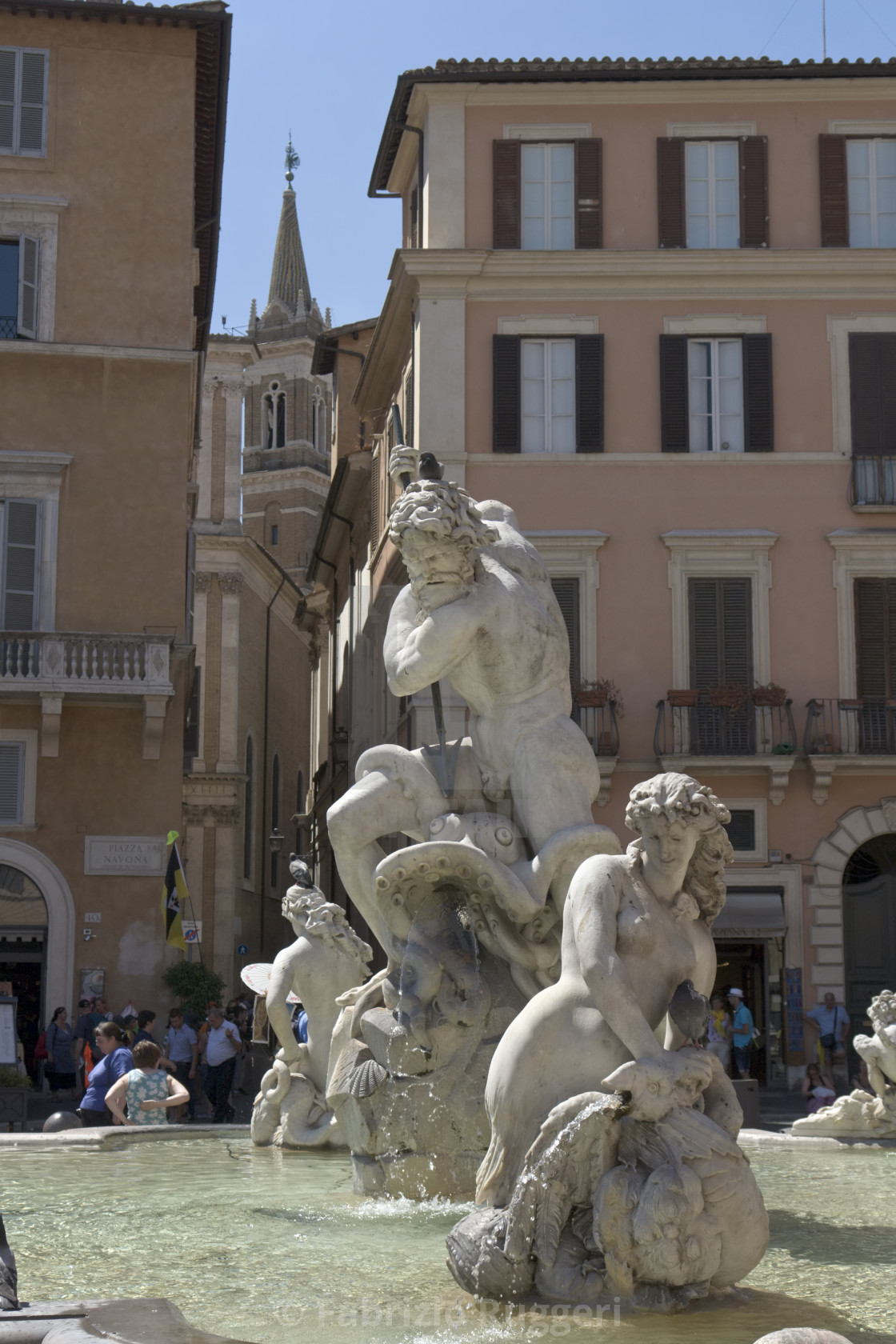
The fountain looks much different nowadays than it did in its original creation. In its origin, the fountain consisted just of a central basin and water feature, without decorative statues. The Fontana del Nettuno, one of many fountains in Italy with the same name, got its name from the central statue of Neptune that was added in 1878. Created by Antonio della Bitta, the central figure of Neptune stands with his body angled, as he is twisting with movement. Below him rests an octopus. The statue captures the moment in which Neptune is stabbing the octopus with a spear and establishing his dominance over the sea and all of its creatures. There are additional statues added by Gregorio Zappalà in 1873. These statues rest in the basin of the fountain and surround Neptune. Figures of Nereids, mythical creatures, horses, and aquatic animals rest around the basin.
In its creation, this fountain was unlike many of the others in this exhibition. Rather than creating an exquisite, elaborate display of power, the fountain held a much simpler purpose. With the Palazzo Pamphili not quite constructed, the piazza was not surrounded by exuberant architecture and thus was merely a public gathering space. Rather than create an expensive yet beautiful fountain, Pope Gregory XIII created a functional fountain. The statues that were later added were there to balance out the Fontana dei Quattro Fiumi and the Fontana del Moro. But with both of those fountains created after the Fontana del Nettuno, there was no need to create a grandiose display of power. Popes create large fountains to be remembered, and thus they place them in areas of prominence. At the time, the Piazza Navona was not such an area. Therefore a fountain was made to bring water from the aqueduct to the people and to have a smaller display of engineering feats in the piazza.
Creator
Giacomo della Porta
Antonio della Bitta
Gregorio Zappalà
Antonio della Bitta
Gregorio Zappalà
Source
Connors, Joseph. Alliance and Enmity in Roman Baroque Urbanism. Rome, Italy: Bibliotheca Hertziana, 1989.
The Fountains of Rome, 1986. https://fod-infobase-com.proxy.lib.duke.edu/p_ViewVideo.aspx?xtid=2150.
Pulvers, Marvin. Roman Fountains: 2000 Fountains in Rome: A Complete Collection. Rome, Italy: L'Erma di Bretschneider, 2002.
Respighi, Ottorino, Tadaaki Otaka, and Patrick Thomas. CD. The Fountains of Rome. BBC Music Magazine, n.d.
Zucker, Paul. “Space and Movement in High Baroque City Planning.” Journal of the Society of Architectural Historians 14, no. 1 (1955): 8–13. https://doi.org/10.2307/987716.
Publisher
Pope Gregory XIII
Date
1574
Contributor
Jacob Carnes
Format
White marble
Type
Fountain
Coverage
Piazza Navona, Rome, Italy
Files
Collection
Citation
Giacomo della Porta
Antonio della Bitta
Gregorio Zappalà, “Fontana del Nettuno,” ARTHIST 256 - Italian Baroque Art - Fall 2021, accessed October 22, 2026, https://baroque.dahvc.org/fall-2021/items/show/339.