Sant'Ivo alla Sapienza
Dublin Core
Title
Sant'Ivo alla Sapienza
Description
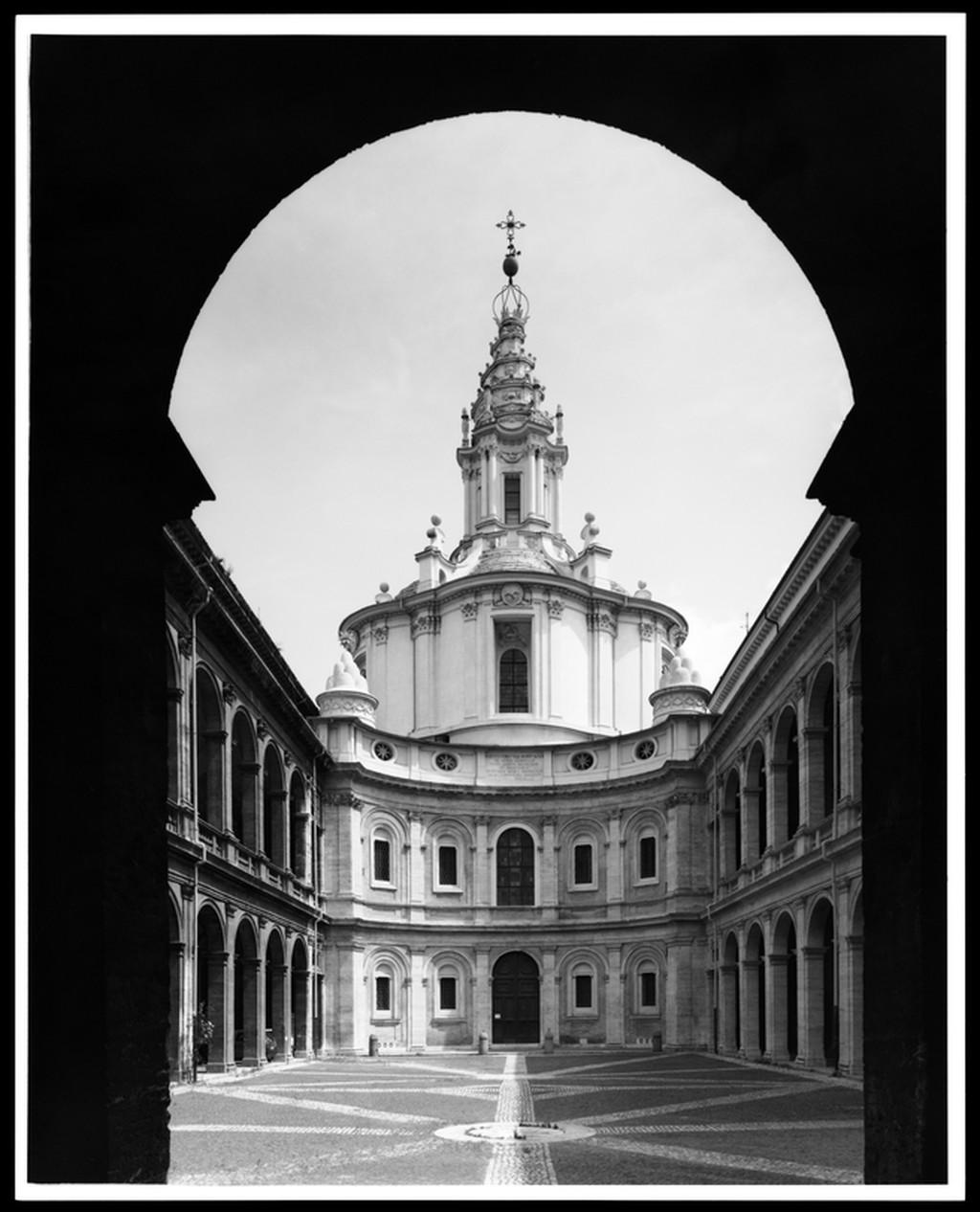
This church, consecrated in 1660, represents another architectural feat and masterpiece of Borromini. Like in San Carlino, Borromini utilizes a novel geometric plan to erect the church unobtrusively in the context of its surroundings. In fact, the architect makes use of the surrounding courtyard of Della Porta to develop a façade that seamlessly transitions between the exterior and interior. Borromini continues to play with ideas of fluidity and dynamism in the solid structure.
Sant’Ivo alla Sapienza was built as a Roman Catholic church sitting amidst the courtyard of the Palazzo della Sapienza – the palace of the University of Rome. Borromini draws upon these environmental influences as he incorporates both intelligence and innovation into his design.
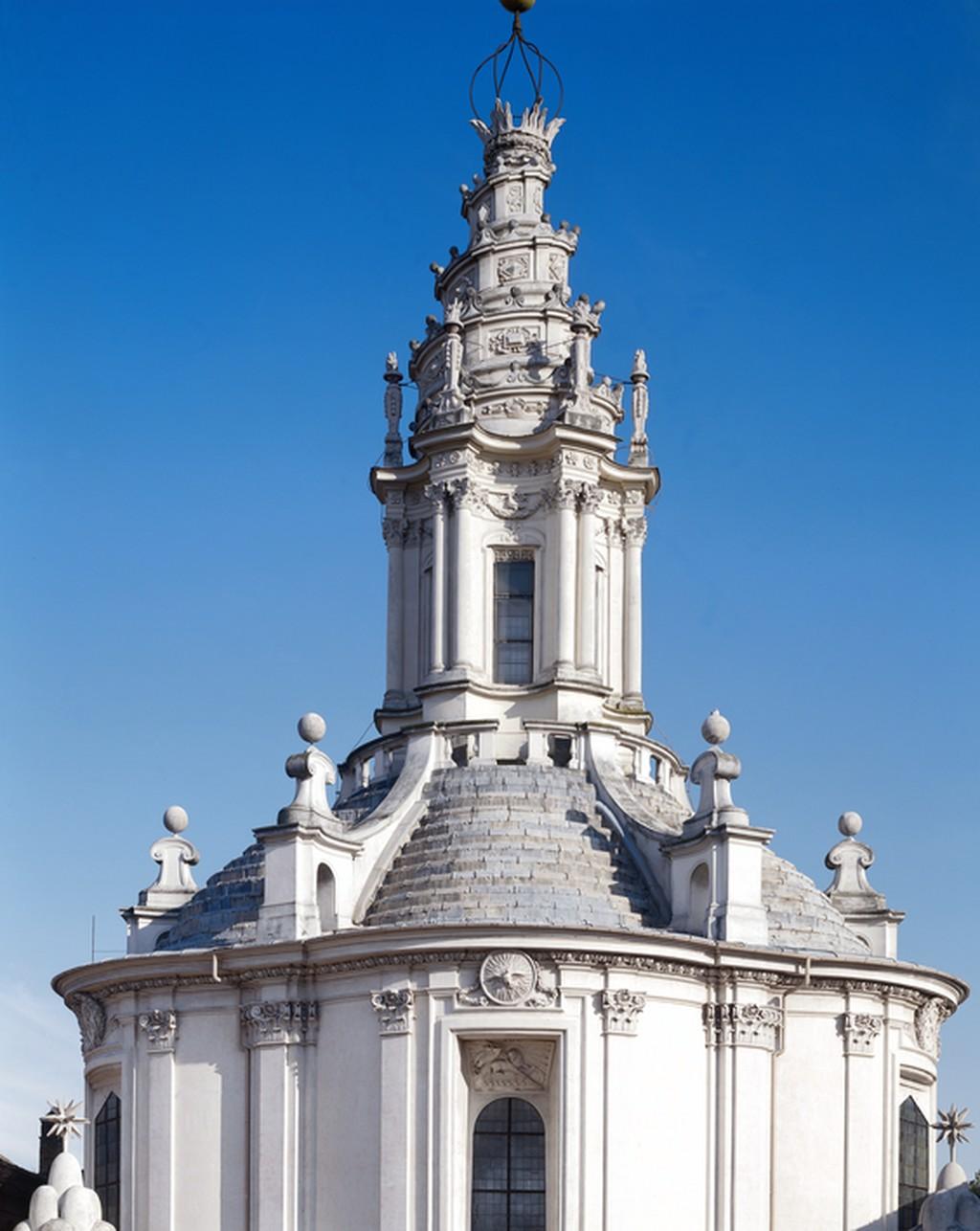
Notably, these two forces intersect at the spiraling lantern atop the church's external face. A convergence of bending metals coalesces into a large golden orb upon which an artistic cross sits. The structural meaning and resemblance of this element remain a topic of debate. Perhaps this was Borromini’s intention, to construct something that would remain in the intellectual conversation for generations to follow. Nonetheless, the dynamic interactions of the many elements of the lantern offer biblical and more practical theories of why it was contrived.
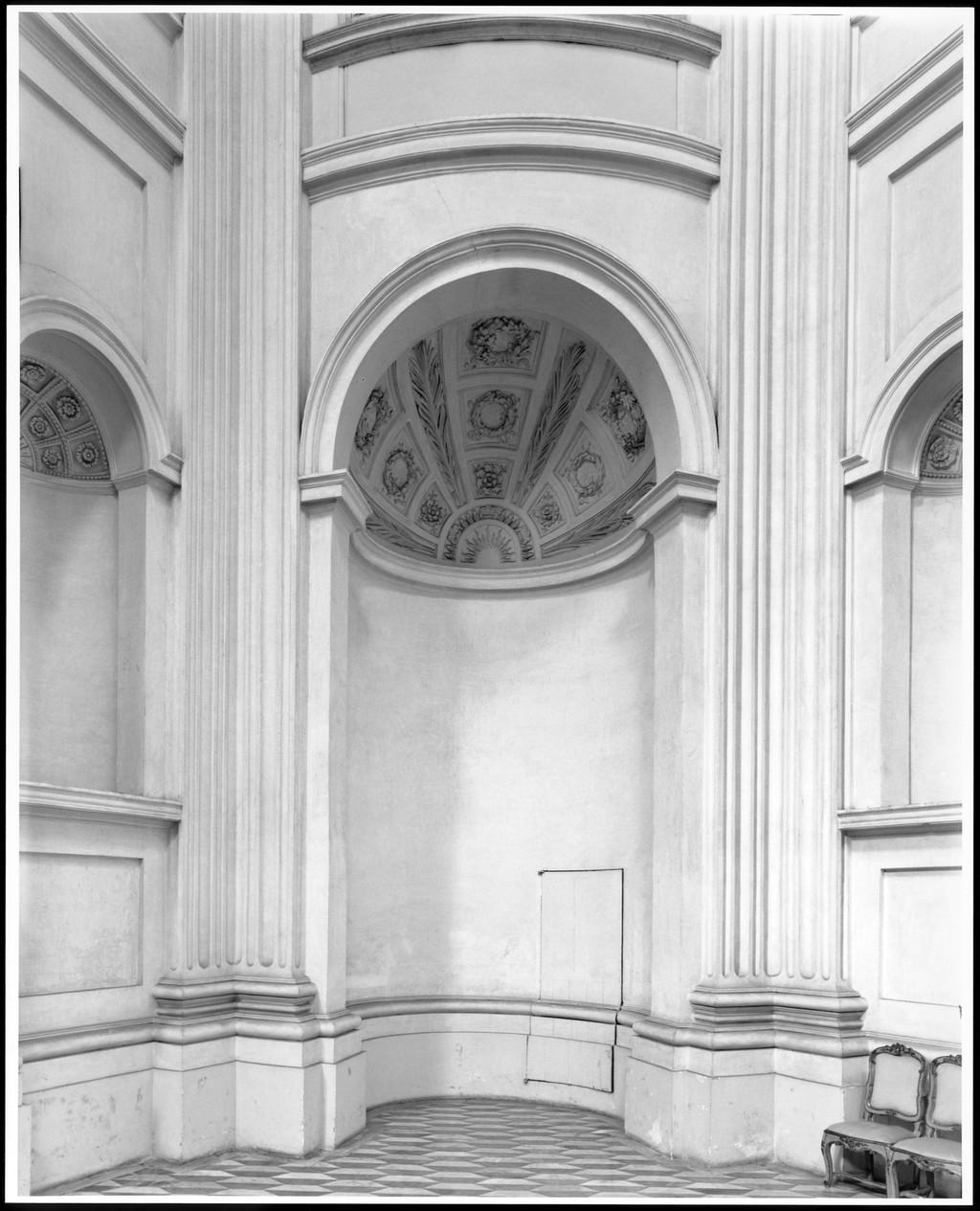
Such ambiguity is furthered when entering the church. There is an anamorphic structural interior, characteristic of Borromini. Pulsing pilasters are organized throughout providing structural integrity. However, these pilasters also add to the discombobulating effects of concavity found in the bays of the church. Yet, there is a calming resolution to the unnerving experience as the dome atop draws, viewers, upwards. The heavens are depicted overhead, with the rhythmic ribbing of the dome melting into its apex.
While his architectural feats are loud and boisterous, Borromini himself was extremely reserved and introverted. Indeed, there are few primary recounts of conversations and interactions Borromini had during the time of the construction of Sant'Ivo alla Sapienza. Thus, many have relied on original building plans and their evolution over time as a written record of architectural language for Borromini. However, there seem to be competing plan records that rely on competing geometrical patterns.
Alas, the beauty of the church is furthered by many of the mysteries of its construction.
Creator
Francesco Borromini
Source
Connors, Joseph. “Borromini’s S. Ivo Alla Sapienza: The Spiral.” The Burlington Magazine 138, no. 1123 (1996): 668–82. http://www.jstor.org/stable/887143.
Francesco Borromini. Sant’Ivo Alla Sapienza, Exterior, Lantern. Images, n.d. https://jstor.org/stable/community.15996748.
Francesco Borromini. Sant’Ivo Alla Sapienza. Images, n.d. https://jstor.org/stable/community.14680880.
Francesco Borromini. Sant’Ivo Alla Sapienza. Images, n.d. https://jstor.org/stable/community.14699177.
Hatch, John G. “The Science behind Francesco Borromini’s Divine Geometry.” Architecture and Mathematics from Antiquity to the Future, 2014, 217–29. https://doi.org/10.1007/978-3-319-00143-2_14.
Scott, John Beldon. “S. Ivo Alla Sapienza and Borromini’s Symbolic Language.” Journal of the Society of Architectural Historians 41, no. 4 (1982): 294–317. https://doi.org/10.2307/989801.
Smyth-Pinney, Julia M. “Borromini’s Plans for Sant’Ivo Alla Sapienza.” Journal of the Society of Architectural Historians 59, no. 3 (2000): 312–37. https://doi.org/10.2307/991646.
Publisher
Pope Urban VIII
Date
1660
Contributor
Michael Greenstein
Rights
ITHAKA encourages Authorized Users to engage in research activities, including downloading or printing Content in reasonable amounts for non-commercial, scholarly purposes, as well as use the Content on its platform in the following ways (as long as you abide by the prohibited uses in Section 4 below) (collectively the “Permitted Uses”): in student assignments, educational presentations, and student or faculty curatorial portfolios (so long as such use conforms to the customary and usual practice in the field), or in research papers or dissertations, including reproductions of the dissertations (provided such reproductions do not include Books, and are only for personal use, library deposit, and/or use solely within your Institutional Licensee);
Format
27 m x 26 m
Type
Church
Coverage
Rome, Italy
Files
Collection
Citation
Francesco Borromini, “Sant'Ivo alla Sapienza,” ARTHIST 256 - Italian Baroque Art - Fall 2021, accessed October 22, 2026, https://baroque.dahvc.org/fall-2021/items/show/267.