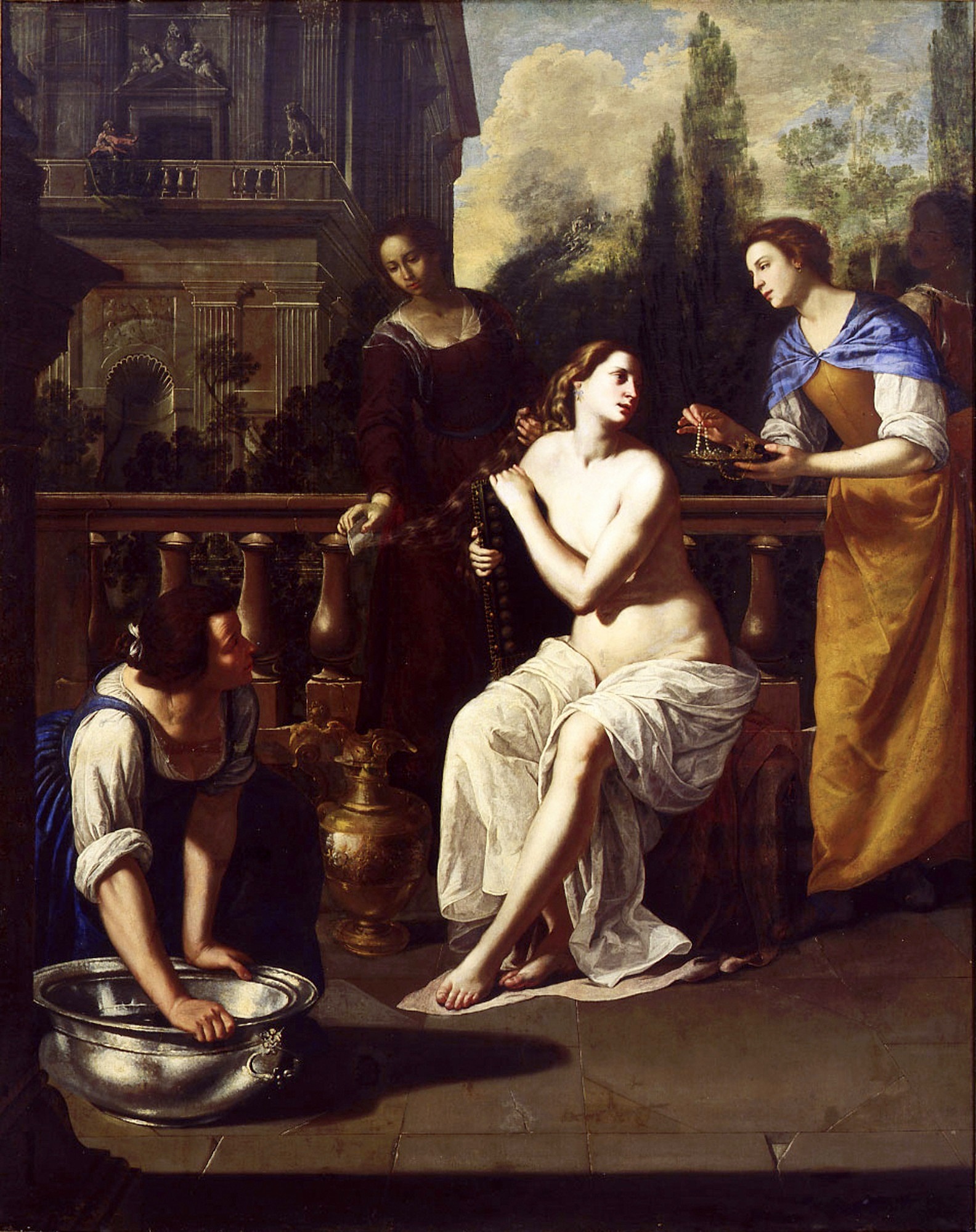
Antonio Moro's Self Portrait
Dublin Core
Title
Antonio Moro's Self Portrait
Subject
Comparison piece to Gentileschi's Self-Portrait
Description
In the 1500s, there was a rise of artworks that represented this theme of the allegory of art or "pittura."
It's crucial to understand that before the sixteenth century painting was not considered a liberal art and was not considered an intellectual pursuit. Thus, in the Rennaisance period, we see a movement to push for the art of painting to be considered a liberal art and to be considered a valuable, sophisticated endeavor. Thus many artists began to create paintings that glorified the art of painting; it was a form of propagandizing the status of art and at the same time glorified the artist themselves.
Many artists did this through self-portraits which functioned to glorify their status as artists and showed them in the act of painting.
An example of this is Antonio Moro's "Self-Portrait" from 1558. In this work, the artist is shown standing before his easel. He holds his paint brushed and easel with one hand and gazes at us. He stands before a blank canvas and wears sophisticated, fine clothes.
Creator
Antonio Moro
Source
Garrard, Mary D. “Artemisia Gentileschi’s Self-Portrait as the Allegory of Painting.” The Art Bulletin 62, no. 1 (1980): 97–112. https://doi.org/10.2307/3049963.
Mary D. Garrad’s piece “Artemisia Gentileschi’s Self-Portrait as the Allegory of Painting.” analyzes the historical significance behind Gentileschi’s painting “Self Portrait as the Allegory of Painting.'' Gerrad argues that with this piece, Gentileschi was able to accomplish an art feat that no male artist could ever achieve. In the Renaissance, the allegory of painting was depicted as a female figure who represented the tradition of painting. Here, in this piece, paints herself as the allegory of painting, arguing that she symbolizes the art of painting itself. Many men tried to do this with their own self-portraits but because of their gender, they could never directly represent themselves as the allegory of painting like Gentileschi. She argues this point by comparing different male self-portraits from artists like Titian and Antonio Mario to Gentlischi’s self-portraits, explaining the greater success of Gentileschi's portrait.
Fredericksen, Burton B. “A New Portrait by Anthonis Mor.” The J. Paul Getty Museum Journal 6/7 (1978): 13–22. http://www.jstor.org/stable/4166384.
Woodall, Joanna. Anthonis Mor: art and authority. Brill, 2016.
Publisher
Wikimedia Commons
Date
1558
Contributor
Sofia Silvosa
Format
Height (113 cm); Width (84 cm)
Type
Oil Painting
Coverage
Uffizi Gallery
Files

Citation
Antonio Moro, “Antonio Moro's Self Portrait,” ARTHIST 256 - Italian Baroque Art - Fall 2021, accessed October 22, 2026, https://baroque.dahvc.org/fall-2021/items/show/218.