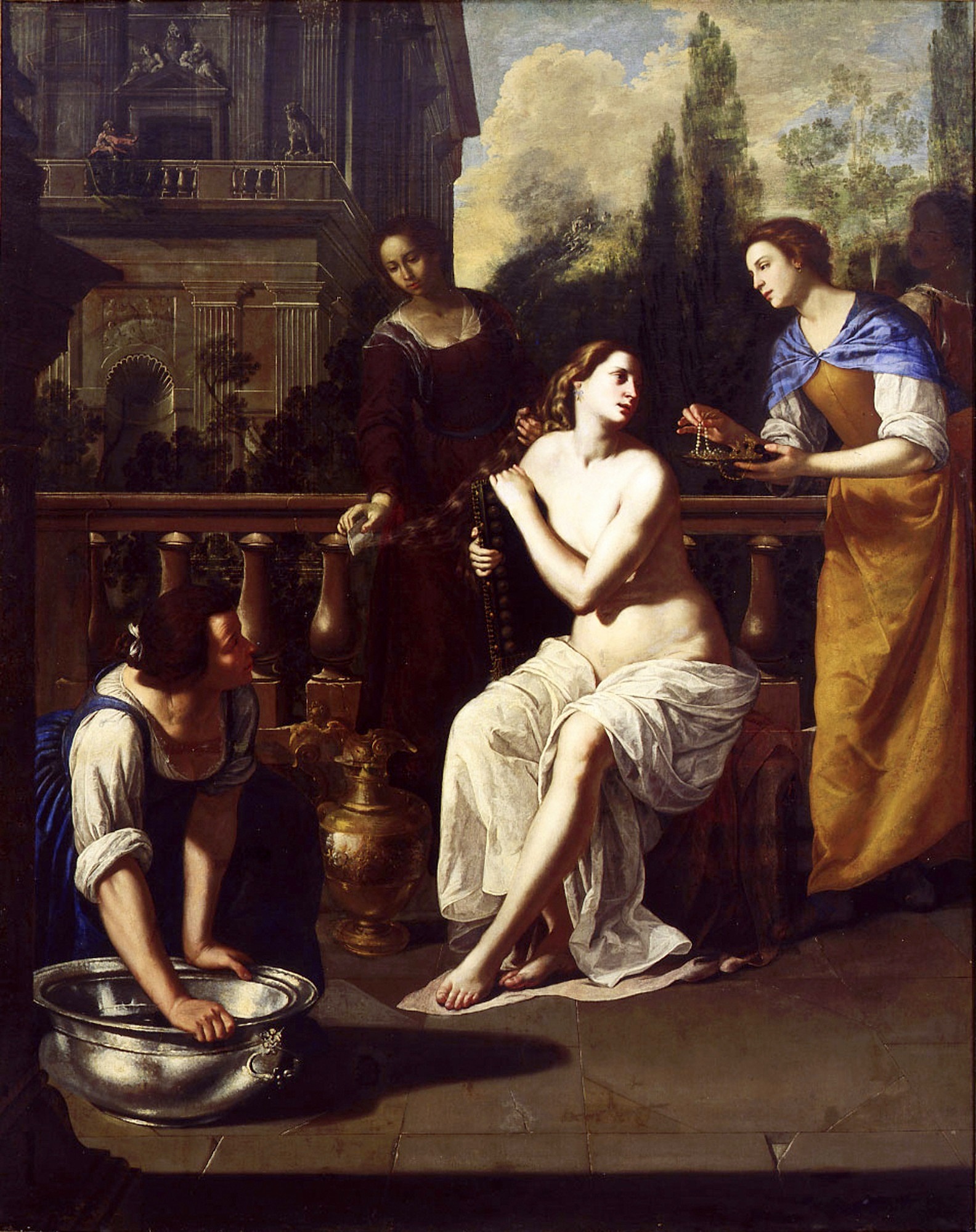
Bernini's Mythological Sculptures
Dublin Core
Title
Bernini's Mythological Sculptures
Description
Gian Lorenzo Bernini is considered to be one of the important artists from the Baroque period and is considered to be one of the most influential artists of all time. He was born in Naples in 1598 and from a young age was considered gifted in the arts. He was just eleven years old when his father, sculptor Pietro Bernini, brought him as a prodigy to Pope Paul V Borghese.
His marble sculptures are his most celebrated works with groundbreaking biblical works like the “David” and “The Ecstacy of St. Theresa.” However, many of his most renowned sculptures, which encompass an earlier point in his career, include his mythological sculptures. Many of these sculptures depicted Green and Roman myths. During the baroque period, alongside several biblical works, we see a large number of mythological artworks– a continuity from the Renaissance period. Bernini’s works are no exception. His mythological sculptures are famous for their dynamic composition and emotional storytelling. Bernini was heavily inspired by many of the myths included in Ovid’s Metamorphoses.
This collection explores ten notable mythological sculptures by Bernini and tackles to understand why Bernini was so intrigued by these myths and how he was able to communicate these myths through sculpture. Furthermore, on a broader scale, this collection will also explore the use of mythology in the Counter-Reformation period and its place in Baroque art.
Creator
Sofia Silvosa
Source
Wilkins, Ann Thomas. “Bernini and Ovid: Expanding the Concept of Metamorphosis.” International Journal of the Classical Tradition 6, no. 3 (2000): 383–408. http://www.jstor.org/stable/30222585.
Bacchi, Andrea, and Anna Coliva. Bernini. Milano: Officina Libraria srl, 2017.
Reid, Jane Davidson. The Oxford Guide to Classical Mythology in the Arts 1300-1990s. 1. Vol. 1. New York: Oxford Univ. Press, 1993.
Strunck, Christina. "The poisoned present. A new reading of Gianlorenzo Bernini's Rape of Proserpina." (2014): 185-201.
Dickerson, Claude Douglas, Anthony Sigel, Ian Wardropper, Andrea Bacchi, Tomaso Montanari, Steven F. Ostrow, and A. Lawrence Jenkens. Bernini: Sculpting in Clay. New York: The Metropolitan Museum of Art, 2012.
Victoria and Albert Museum, Online Museum. “Bernini's Neptune and Triton.” 'Neptune and Triton' by Gianlorenzo Bernini. Victoria and Albert Museum, Cromwell Road, South Kensington, London SW7 2RL. Telephone +44 (0)20 7942 2000. Email vanda@vam.ac.uk, August 22, 2013. http://www.vam.ac.uk/content/articles/n/berninis-neptune-and-triton/
Collier, William. “New Light on Bernini’s Neptune and Triton.” Journal of the Warburg and Courtauld Institutes 31 (1968): 438–40. https://doi.org/10.2307/750654.
Date
1598-1680
Contributor
Sofia Silvosa
Type
Sculptures
Collection Items
Apollo and Daphne
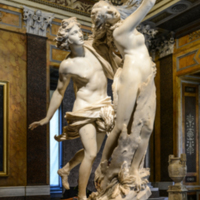
Bernini’s life-sized marble sculpture of “Apollo and Daphne” is regarded as one of his most powerful and emotional works. The work was commissioned in 1622 by Cardinal Scipione Borghese and was initially placed in his villa.
The work illustrates…
The work illustrates…
The Rape of Proserpina
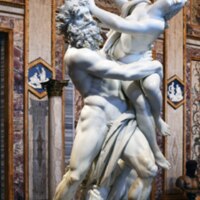
Bernini’s “The Rape of Prosperina” marble sculpture portrays the abduction of Proserpina, also known as Persephone, who is seized by the god of the underworld Pluto. The work was commissioned by Cardinal Scipione Borghese for his four large-scale…
Neptune and Triton
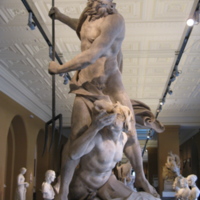
The breathtaking “Neptune and Triton” was completed by Bernini in 1622-3. It was commissioned by Alessandro Damascenti-Peretti Montalto. The sculpture was intended to be the focal point of his large fish pond at his villa.
The sculpture is a…
The sculpture is a…
Faun Teased by Children
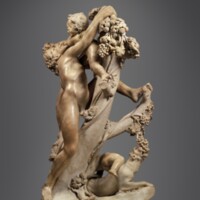
“A Faun Teased by Children” is one of Bernini’s earliest works. The artist completed this work in 1616 when he was about eighteen years old. Bernini completed this small yet masterful sculpture under the supervision of his father
Self-Portrait as a Young Man
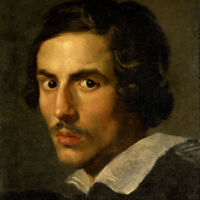
Gian Lorenzo Bernini's oil painting self-portrait. This is one of Bernini's most famous paintings.